 CharaFold
What should an OC reference sheet include?
An OC is an original character. For a visual handoff, show the character’s appearance: a clear face, relevant body angles, the recurring outfit and a few expressions. Add a short brief for details that the images cannot establish. Story history and personality notes can help an artist, but they do not replace visible design references.
Choose the views the next artist needs. An expression illustration may only need a readable portrait; a new full-body drawing needs clothing and footwear. If you already have approved artwork, arrange those files instead of generating replacements.
- Identity: face structure, hairstyle, distinctive marks and recognizable silhouette.
- Clothing: layers, colors, recurring accessories and which side each detail belongs on.
- Views: front, three-quarter, side and back where the design calls for them.
- Decisions: separate the approved design from hidden or unresolved details.
A visual OC example: Mara.
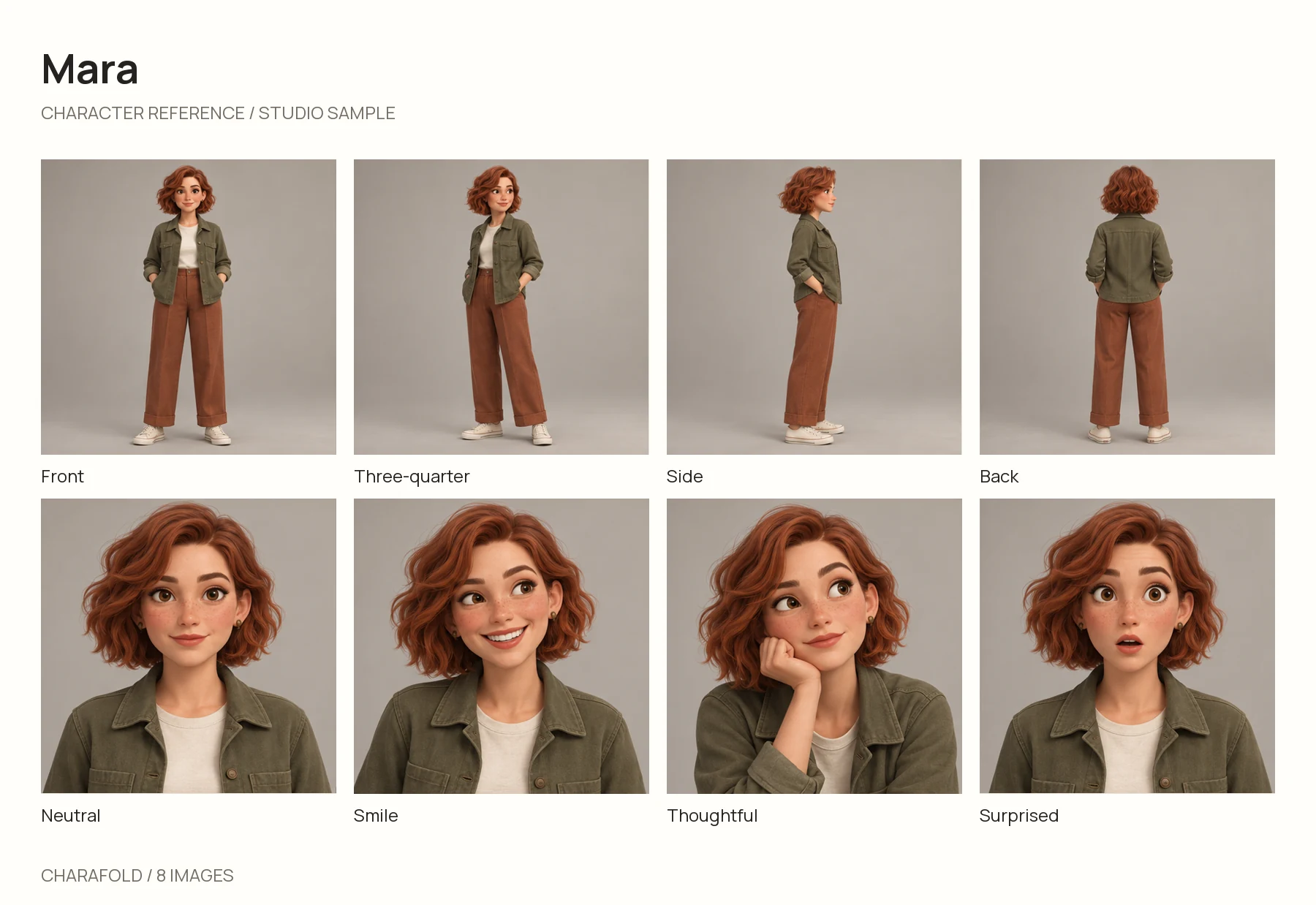
The copper curls, olive overshirt, white top, rust trousers and cream shoes give the illustrator concrete details to compare. A front image still leaves rear construction undecided. Do not turn an inferred seam or accessory into an approved design merely because it appears in another view.
In that separate test, the requested side view returned several figures on one image. It needs correction before it can serve as a single-profile reference. Keeping the failure visible helps distinguish a delivered file from an accepted creative result.
Write a brief the artist can act on.
Use three groups: approved details, undecided details and requested delivery files. Keep the brief close to the images. “Keep the olive overshirt and rust trousers; the jacket back is undecided” is more useful than a second, conflicting description of the whole character.
| Decision | Mara example | Next action |
|---|---|---|
| Approved from the source | Copper curls and visible clothing layers | Compare each new view against the original. |
| Not established by the source | Rear jacket construction | Clarify it or label it undecided. |
| Output needs revision | Several figures in the requested single-side image | Request one right-side figure; review the candidate. |
| Delivery requirement | Selected individual images and a labeled overview | Confirm file names, dimensions and chosen versions. |
Choose how to build the reference.
Have the artwork? Use the free browser sheet maker to arrange and label it, or draw in a blank PNG/SVG template. The maker exports a flat 2400 × 1800 PNG; it does not create missing angles.
Need new reference candidates? Start from one image in the AI reference studio. Four body views or four expressions use 12 credits; a combined eight-image set uses 24. A refinement of one image uses 3 credits and keeps the other views. Credit packs are one-time purchases.
Review the proposed design before choosing it. CharaFold prepares reference candidates and delivery files; it does not generate a comic sequence or guarantee exact orthographic geometry.
Send a reference pack with clear decisions.
- Choose the versions. Keep one accepted file for each requested view; separate provisional alternatives.
- Label the files. Use the character name, angle or expression and a revision date so an artist can tell them apart.
- Attach the brief. Include unresolved details and the changes the artist can make. Confirm which reference files they accept.
- Download the pack. The AI studio can export individual PNG/WebP/JPG images, a labeled PNG contact sheet and an optional text brief in a ZIP. Private images expire 24 hours after each file is saved.
Keep your original artwork and any layered working files separately. A flattened reference sheet is an overview for communication, not an editable source document.